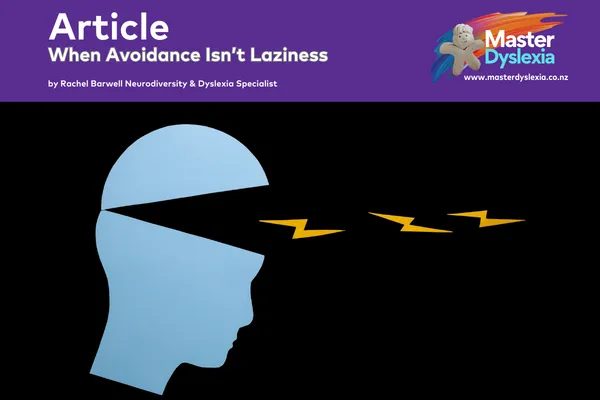
When Avoidance Isn't Laziness
Parents often tell me their child avoids learning.
They delay homework.
They “forget” tasks.
They shut down when asked to begin.
They become silly, distracted, irritated, or suddenly emotional.
It can look like resistance.
It can feel personal.
And over time, families start to wonder whether their child simply isn’t trying.
But avoidance is rarely about laziness.
More often, it’s about protection.
When Starting Feels Like the Hardest Part
For many children, the hardest moment isn’t the learning itself.
It’s the beginning.
Beginning requires:
focus working memory
emotional readiness
tolerance for uncertainty
belief that the task is manageable
If a child’s previous experiences of learning have been stressful, the nervous system often remembers
Even before the task starts, the body may respond with tension, overwhelm, or shutdown.
Avoidance becomes a way of staying safe.
What Avoidance Can Be Communicating
Avoidance is often a message.
It can mean:
“This feels too hard.”
“I don’t know where to start.”
“I can’t hold all the steps in my mind.”
“I’m afraid of getting it wrong.”
“I don’t have enough energy for this.”
Children don’t always have the language for these experiences.
So their behaviour speaks instead.
The Role of Confidence
Avoidance often increases when confidence is fragile.
A child may have the ability to complete a task, but not the emotional safety to attempt it.
When learning has felt unpredictable, confidence becomes cautious.
Children begin to associate effort with disappointment.
Not because they lack motivation, but because they have learned that trying can feel risky.
Why Pressure Makes Avoidance Worse
When adults see avoidance, they often respond with urgency.
More reminders.
More consequences.
More pressure to “just get it done”.
But pressure adds load.
And when load increases, access often decreases.
This is why a child may appear capable in one moment, then completely overwhelmed the next.
Avoidance is not stubbornness.
It is often a nervous system response.
A Calmer Way Forward
For many children, the most supportive shift is not more demand.
It is more clarity.
Smaller steps.
A gentler start.
A sense of predictability.
When the beginning feels manageable, the rest of learning often becomes more accessible.
Progress may not look dramatic.
But it becomes steadier.
And children begin to trust themselves again.
When We Reframe Avoidance, Everything Changes
Avoidance is easy to misread.
But when families begin to see it as information rather than attitude, the tone of learning changes.
Less conflict.
Less shame.
More understanding.
And in that space, learning becomes possible again.
Sometimes the greatest shift is simply recognising what a child is trying to protect themselves from.
Interested in finding out how to create a shift in yours or your loved one’s approach to learning? Make a time this week for a free, no-obligation chat with me: https://api.choreosuite.com/widget/bookings/dyslexia-explore
