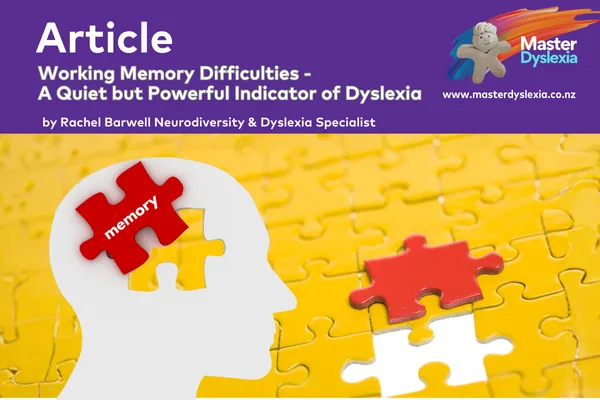
Working Memory Difficulties
Working memory is one of those things we don’t notice until it isn’t doing what we expect it to do. For many dyslexic learners, it’s an area that can quietly shape their day-to-day experiences long before anyone realises what’s going on. As we step into Week 3 of our series on the Signs of Dyslexia, I want to spend some time here, because this is often the missing piece that finally makes everything “click” for families and adults seeking answers.
When we talk about working memory, we're essentially talking about a person’s ability to hold information in their mind while also using it. It’s like having a mental notepad where you temporarily store the next step, the idea you’re forming, or the sounds you’re blending. But for dyslexic brains, that mental notepad often feels smaller or more slippery. Information disappears more quickly, and the effort it takes to hold everything in place can be much higher than we expect.
What this means in real life is that a child might walk across the room and forget what they were sent to do. A student may read a sentence but lose track of what they’ve just read by the time they reach the next line. An adult may begin explaining something and suddenly find the thread has vanished. These moments don’t come from a lack of intelligence or motivation, far from it. They come from a very real cognitive load that dyslexic individuals carry every single day.
I often see bright, articulate people who know exactly what they want to say or do, but their working memory creates barriers between their thoughts and their actions. For example, a child might understand a story perfectly well when they hear it, but struggle to write it down because holding the ideas, forming the sentences, and managing spelling all at once exceeds the capacity of their working memory. Or they might struggle with multi-step instructions not because they weren’t listening, but because the second and third steps simply slipped away before they could act on them.
It can be so easy for these signs to be misinterpreted. Adults might see a child who appears inattentive, distracted, or even defiant. Teachers might assume a lack of focus. Employers might mistake it for forgetfulness or poor organisation. But what I want to emphasise, and what I hope this series helps people understand, is that dyslexic learners are often trying harder than anyone else in the room. They’re working with a brain that processes information differently, and that difference can add an invisible layer of effort to everything they do.
The encouraging part is that working memory challenges are not a dead end. With the right understanding and support, dyslexic learners can thrive, and often discover strategies that make them incredibly resourceful, creative, and adaptable. Once the pressure is eased and the expectation to “just remember” is replaced with practical support, everything becomes more manageable.
Tools like visual prompts, checklists, colour coding, and breaking tasks into smaller pieces can make a huge difference. Giving instructions one or two steps at a time, or allowing someone to use technology as an external memory aid, is not a crutch, it’s an accommodation that helps them function at their true level. Over time, these supports become part of a learner’s internal toolkit, and confidence often grows alongside skill.
I’ve seen children transform once the load on their working memory is reduced. I’ve seen adults finally understand themselves after years of frustration. And I’ve seen the relief that comes when someone realises: “Oh… it’s not me. My brain just works differently.” That moment of self-compassion is powerful, and it opens the door to progress.
So if you recognise these experiences, in a child, a student, a friend, or even in yourself, know that you’re not alone. Working memory difficulties are incredibly common in dyslexia, and they tell us so much about the strengths and needs of a person’s unique learning profile. With awareness, the right strategies, and a shift in expectations, dyslexic learners can excel in ways that honour their abilities, not their challenges.
Next week, we’re moving on to Sign #4: Slow Reading and Processing Speed, an area that is widely misunderstood but incredibly important when recognising dyslexia. I’m looking forward to diving into it with you.
Want to dive a little deeper? Check out my e-book: How to resolve the top 5 signs of dyslexia on https://masterdyslexia.co.nz/5topsignsdyslexiaebookWant to explore effective dyslexia solutions for yourself or a loved one? Reach out and book a free exploratory call with me this week: https://bit.ly/DyslexiaExplore
